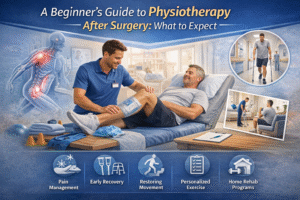
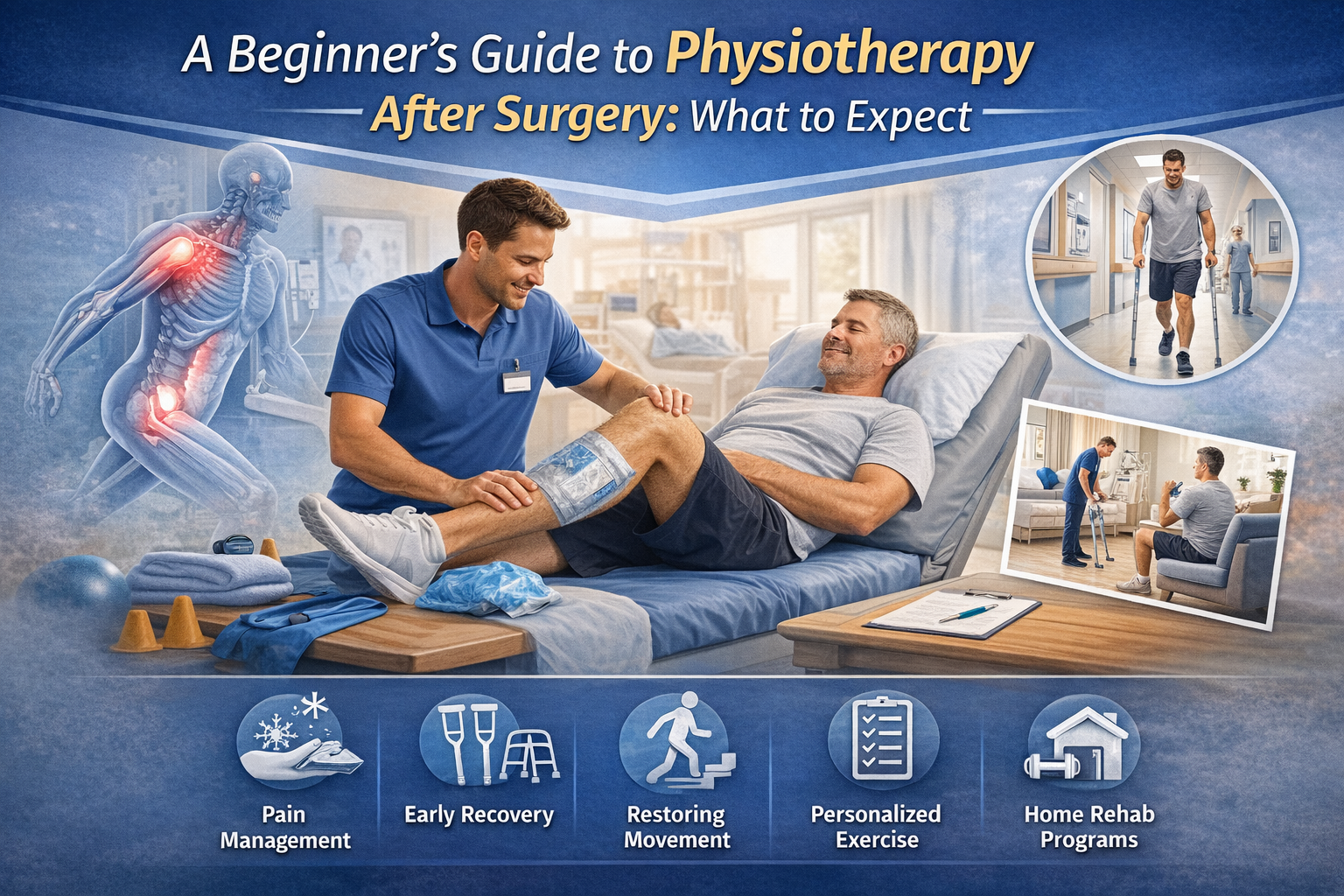
Surgery fixes structural issues, but recovery depends heavily on rehabilitation. Without physiotherapy, stiffness, weakness, and reduced mobility can persist longer than necessary.
Physiotherapy bridges the gap between surgical repair and full functional recovery.
If you’re preparing for surgery or already recovering, visiting our homepage can help you understand post-operative physiotherapy support options.
Early Recovery Phase
Physiotherapy often starts soon after surgery once medically approved.
Initial goals
- Improve circulation
- Prevent stiffness
- Reduce swelling
- Maintain gentle movement
These early steps significantly influence long-term recovery.
Pain Management Approaches
Physiotherapists use non-invasive techniques such as:
- Gentle mobilisation
- Controlled stretching
- Soft tissue therapy
- Positioning advice
This helps reduce reliance on medication.
Restoring Movement Gradually
Mobility restoration is a careful balance. Too much movement risks injury, too little delays recovery.
Physiotherapists design progressive plans tailored to your surgery type.
Strength Rebuilding
Muscle loss happens quickly after surgery.
Gradual strengthening prevents strain on healing tissues while restoring functional capacity.
Posture and Movement Training
Many surgeries stem from long-term biomechanical issues. Physiotherapy addresses these root causes to prevent recurrence.
Focus areas
- Walking patterns
- Joint alignment
- Daily movement habits
This stage is crucial for lasting results.
Home Exercise Programs
Recovery doesn’t stop at clinic sessions.
Simple home routines accelerate healing and maintain progress between appointments.
Consistency here makes a major difference.
If you want structured post-surgery guidance, visiting our homepage can provide helpful direction.
Emotional Support During Recovery
Recovery can feel slow and uncertain.
Physiotherapists provide reassurance, track progress, and help maintain motivation. This emotional aspect often gets overlooked but plays a big role in successful rehabilitation.
Final Thoughts
Post-surgical physiotherapy is not optional for optimal recovery. It ensures mobility returns safely, strength rebuilds correctly, and future complications are minimised.
With the right support, most patients return to normal activities sooner than expected.