You can walk around the supermarket without much trouble, then feel a sharp complaint from your knee on the first flight of stairs. It is a familiar pattern, and it can make ordinary days awkward. Getting to a station platform, carrying washing upstairs or stepping down from a raised entrance suddenly takes more thought.
Pain on stairs does not identify one particular injury. Several knee problems can behave this way, and the right approach depends on the pattern, your recent activity and what an examination shows. Understanding those differences is more useful than assuming your knee is simply wearing out.
Why stairs can expose a knee problem
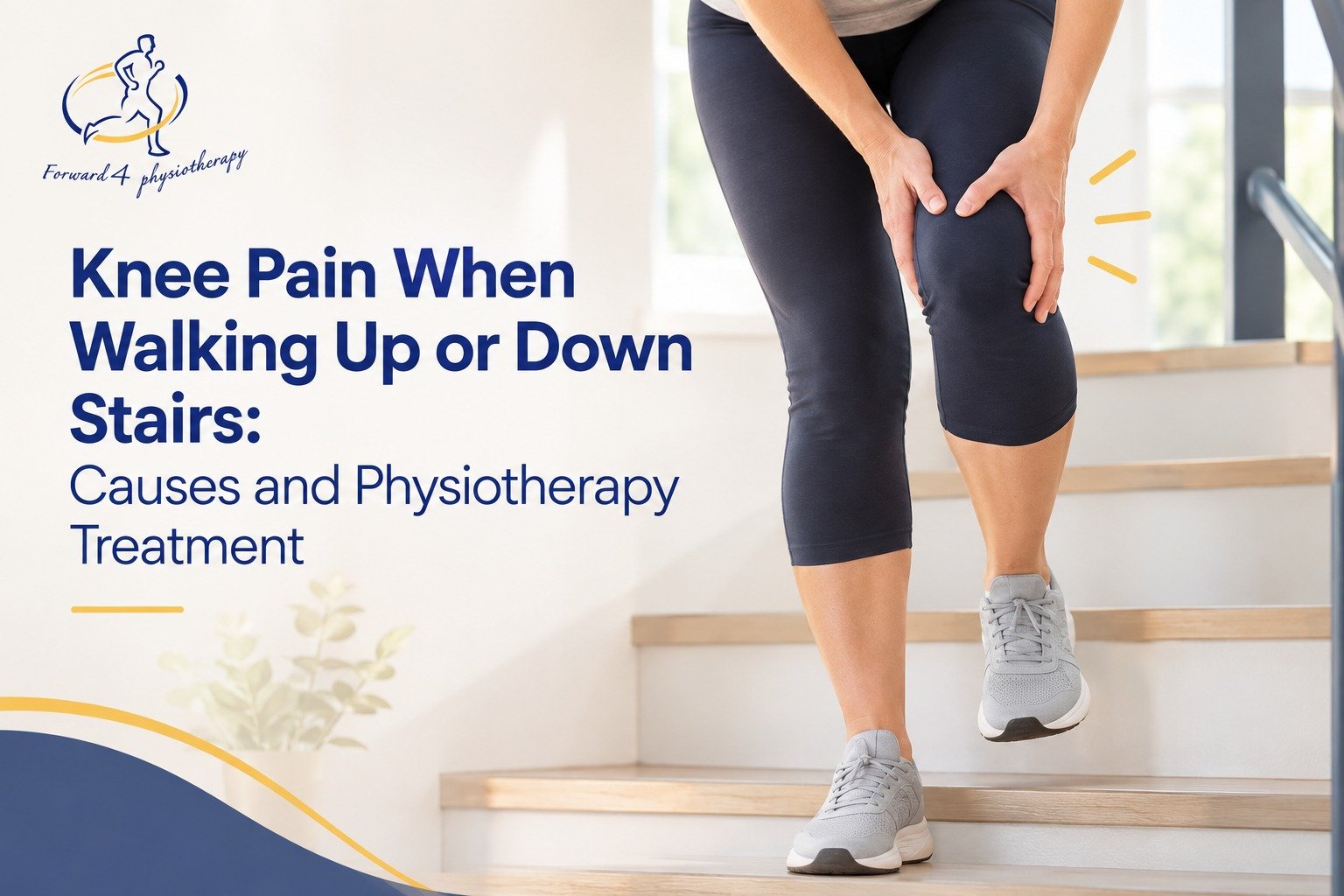
Stairs ask your leg to support and move your body while the knee is bent. Going up involves pushing yourself upwards. Going down requires controlled lowering, with your thigh muscles helping you absorb the load. That is different from walking across a level floor.
A knee that tolerates a gentle walk may therefore complain on steps. A sudden increase in stair climbing, hill walking, gym sessions or running can make that difference noticeable. For someone in Mango Hill or North Lakes, the trigger might be a new exercise routine rather than an obvious accident.
This does not mean stairs are inherently harmful. They can reveal that the demands of an activity currently exceed what your knee comfortably tolerates. The task is to work out why and build that tolerance back appropriately.
Pain around or behind the kneecap
Patellofemoral pain is a common explanation for discomfort at the front of the knee. It often becomes noticeable during stairs, squats, running or sitting with the knee bent for a long time. The pain may feel difficult to pinpoint, spreading around or behind the kneecap.
It is tempting to describe every case as a kneecap tracking problem. In practice, contributing factors vary. Recent changes in activity, leg strength, recovery and the way a person manages a movement may all be relevant. An assessment helps establish which factors actually matter for you.
Clicking alone is not enough to diagnose a problem. Tell your physiotherapist whether the noise comes with pain, swelling, catching or a feeling that the knee will give way. Those details are more informative than the sound itself.
Other possible causes
Knee osteoarthritis can cause pain, stiffness and reduced confidence on stairs. Symptoms do not always match the severity of changes on an X-ray, and an arthritis diagnosis does not mean you should stop moving. A suitable exercise plan can help maintain strength and everyday function.
Pain concentrated just below the kneecap can involve the patellar tendon, particularly after repeated jumping, running or a change in training. Pain along the joint line, especially after a twist, may need assessment for a meniscal or other joint injury. Swelling and true locking deserve attention.
Sometimes pain is influenced by the hip, lower back or a previous injury. These possibilities are why a generic online exercise list cannot reliably tell you what is wrong. Even two people who both dislike downstairs walking may need different starting points.
What to change while the knee settles
Begin by reducing the activities that clearly provoke symptoms rather than giving up all movement. If repeated stair trips are the main issue, organise household tasks to avoid unnecessary journeys. Use the handrail and carry smaller loads so you can control your movement.
Temporarily taking one step at a time may feel easier. Use the rail for support and ask for advice if you are uncertain which leg should lead. Do not practise a new stair technique while carrying a child or a heavy basket.
Keep comfortable activities in your day. Short, level walks may be manageable even when hills are not. Avoid repeatedly testing the painful movement to see whether it still hurts. Notice how the knee behaves later that day and the following morning, not only during the activity.
What a physiotherapy assessment involves
Expect questions about when the pain started, its exact location, swelling, previous injuries and changes in work or exercise. Mention whether symptoms interrupt sleep, affect walking or make the knee feel unreliable. Bring details of any existing diagnosis or relevant imaging.
The examination may include knee movement, leg strength, balance and a controlled squat or step task. Your physiotherapist may also examine your hip or ankle. The aim is to connect what happens in the clinic with the activities that are difficult outside it.
Imaging is not automatically required for stair pain. A clinician can explain whether it is likely to change management or whether referral is needed. Forward 4’s physiotherapy services include pain management and rehabilitation, which are relevant when everyday movement has become difficult.
Building strength without chasing soreness
Treatment commonly includes a graduated exercise programme. Depending on the assessment, that might involve supported sit-to-stands, exercises for the thigh and hip muscles, or a low step-up. The starting difficulty should match your current capacity rather than your previous fitness.
Exercises should have a clear purpose and a manageable progression. Ask what level of discomfort is acceptable for your particular condition, what a flare-up looks like and when to reduce the load. Sharp pain, increasing swelling or a worsening limp should prompt reassessment.
Hands-on treatment or taping may sometimes help symptoms in the short term. They should support a broader plan that restores movement and capacity. For a person whose goal is using the stairs at home comfortably, improvement should eventually be measured on that task.
When to get help sooner
Seek prompt medical assessment if the knee becomes very swollen, changes shape, cannot bear weight or becomes locked after an injury. A hot, red knee with fever or feeling unwell also needs urgent medical attention. Do not treat those symptoms as an ordinary exercise flare-up.
For less urgent pain, arrange an assessment if stairs remain difficult, symptoms keep returning or you are changing your walking to cope. A useful plan should explain the likely cause, what you can keep doing and how to progress. The goal is comfortable daily movement, with enough strength and confidence for the steps you actually use.