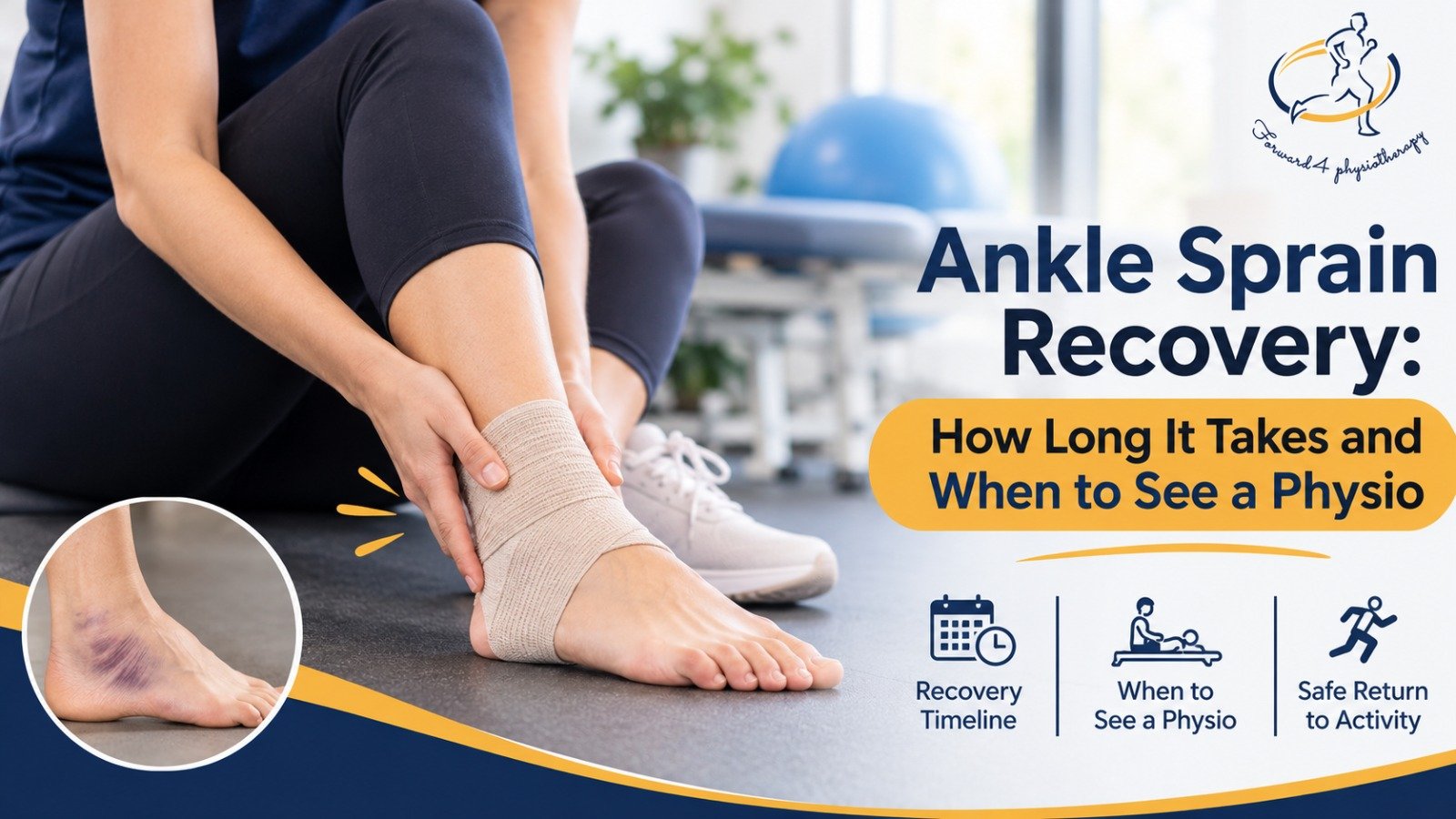
An ankle can roll in a second. Getting off a kerb, landing awkwardly at netball or stepping onto uneven ground can leave you wondering whether you will be walking normally tomorrow or missing sport for weeks.
There is no single recovery time for an ankle sprain. A mild injury may feel noticeably better within a couple of weeks, while a more substantial sprain can take six to twelve weeks or longer. Severe injuries may take months. The more useful question is whether the ankle is steadily recovering the movement, strength and control you need for daily life.
What happens when you sprain an ankle
A sprain injures a ligament, the tissue that helps connect and stabilise bones around a joint. Many ankle sprains happen when the foot rolls inward and stretches the ligaments on the outside. Other injury patterns occur too, including injuries higher above the ankle joint.
Swelling, bruising and tenderness are common, but their appearance alone cannot tell you exactly what is damaged. A fracture or tendon injury can initially look like a sprain. Being able to take a few steps does not reliably rule those problems out.
This matters when someone describes an injury as “just a rolled ankle”. If pain is severe or the ankle is not behaving as expected, have it assessed rather than accepting that description as a diagnosis.
A realistic guide to recovery time
During the first one or two weeks, many uncomplicated sprains begin to settle. Swelling may reduce and putting weight through the foot becomes easier. That improvement is encouraging, but the ankle may still struggle with stairs, longer walks or standing all day.
Over the following weeks, walking and ordinary movement should gradually become more comfortable. Strength and balance often need deliberate practice even when pain has eased. Returning to running, jumping or quick changes of direction generally requires more recovery than walking to the letterbox.
These stages overlap. A person with a physically demanding job may need adjustments for longer than someone who can work seated. Previous sprains, the extent of the injury and other health conditions can also affect progress. Use a timeline as a guide for discussion, not a deadline the ankle must meet.
Get urgent help for these symptoms
Seek prompt medical assessment if you cannot bear weight, have marked pain or swelling, notice a change in the ankle’s shape or suspect a fracture. A foot that becomes cold, pale or numb after injury needs urgent attention. An open wound or signs of infection also change the situation.
Do not repeatedly hop or force yourself to walk as a home test. If getting around safely is difficult, arrange help. A clinician can assess whether imaging or another form of medical care is needed.
Even without those warning signs, get advice if symptoms are worsening or not beginning to improve after a few days. You do not need to wait until a suggested six-week recovery period has passed.
Looking after the ankle in the early days
Initially, protect the ankle from another twist and reduce activities that sharply increase pain. Elevation and suitable compression may help manage swelling. A cold pack wrapped in a towel can offer short-term comfort; keep it off bare skin and avoid it if a clinician has advised against it.
A pharmacist or doctor can advise on pain relief that suits your health history. Medicines are not equally suitable for everyone, particularly if you have other conditions or take regular medication.
Once serious injury has been excluded, gentle movement and a gradual return to weight-bearing are often part of recovery. Prolonged complete rest is not automatically helpful. Equally, “keep moving” does not mean pushing through a pronounced limp or spending a full day on a painful ankle.
Adjust the day around the injury
Consider the walking hidden inside ordinary commitments. A North Lakes shopping trip, school pickups and a shift spent standing can add up quickly. Shorten the outing, arrange a lift or divide jobs across the day while the ankle’s tolerance is limited.
If support, crutches or a brace are recommended, ask how to use them and when to review them. They should fit a recovery plan rather than become equipment you keep using indefinitely without checking progress.
What physiotherapy can add
A physiotherapy assessment looks beyond the swollen area. It can examine your walking, ankle movement, strength, balance and the demands of your job or sport. The history of the injury also matters, including whether the ankle has rolled repeatedly before.
Rehabilitation may begin with comfortable movement and simple strengthening, then progress towards balance tasks and more demanding activity. The exact exercises and amounts should suit the injury. A routine copied from a teammate may be too difficult, too easy or aimed at a different problem.
The sports injury and rehabilitation services at Forward 4 Physiotherapy are relevant for people around Mango Hill and Capestone who need help planning that progression. The useful outcome is a clear understanding of what to work on between visits and how to judge improvement.
Returning to walking and work
Start with a distance you can manage without a substantial increase in symptoms. Notice how the ankle responds later that day and the following morning. If every longer outing leaves you much more swollen or limping, the increase may have been too large.
For work, discuss temporary changes such as fewer stairs, shorter periods standing or modified duties. Your ability to sit at a desk is different from your ability to climb ladders, carry loads or move quickly on uneven ground.
Driving also deserves thought. You need to operate the pedals safely and respond in an emergency. Ask your treating clinician about your injury and any brace, and check relevant insurance requirements rather than testing this in traffic.
Returning to sport without guessing
A date on the calendar is not a return-to-sport test. Running, hopping, landing and changing direction should be rebuilt progressively, with appropriate assessment where needed. Confidence matters too: an ankle that feels likely to give way can change how you move.
Keep working on the recommended strength and balance exercises after ordinary walking feels normal. If the ankle repeatedly rolls, catches, remains swollen or cannot tolerate increasing activity, arrange a review. A quieter ankle is a good sign; an ankle that can reliably handle your actual day is the goal.